
Hay Fever Immunotherapy London
Advanced Desensitisation Treatment for Pollen Allergy
Specialist Hay Fever Treatment at the London Allergy and Immunology Centre
Hay fever (allergic rhinitis) is one of the most common allergic conditions in the United Kingdom, affecting millions of adults and children every year. Symptoms such as sneezing, itchy eyes, nasal congestion and fatigue can significantly affect sleep, school performance and daily productivity.
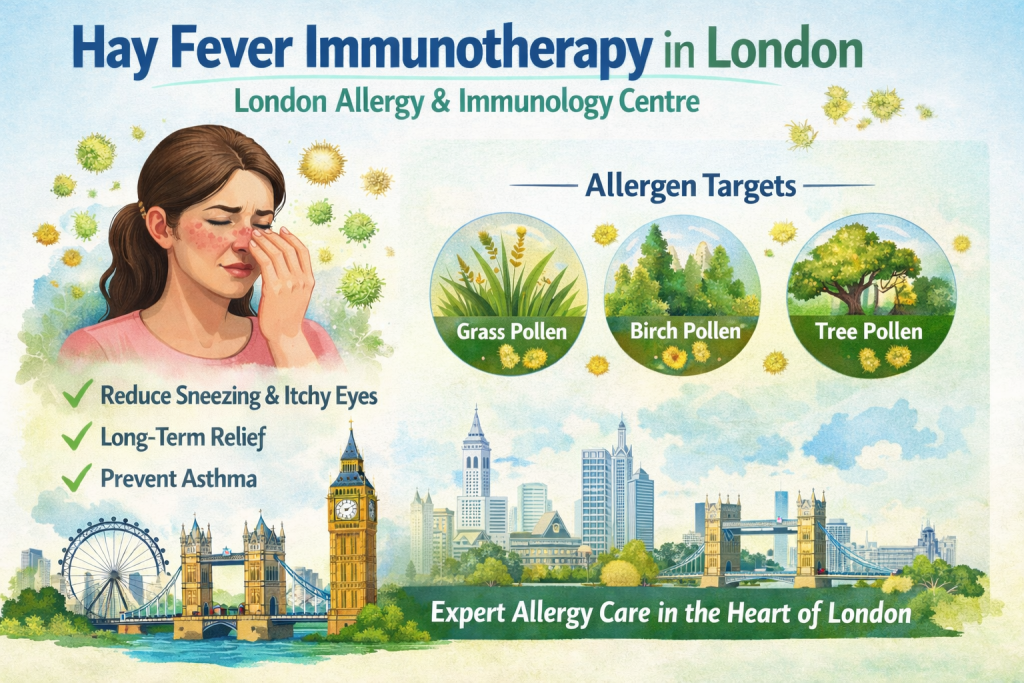
Hay fever immunotherapy for pollen allergies including grass, birch and tree pollen at the London Allergy and Immunology Centre.
At the London Allergy and Immunology Centre, we provide advanced hay fever immunotherapy to treat the underlying cause of pollen allergy rather than simply masking symptoms.
Our specialist treatments help patients with allergies to:
✔ Grass pollen
✔ Birch pollen
✔ Tree pollen
✔ Weed pollen
Allergy immunotherapy is the only treatment capable of modifying the natural course of allergic disease, according to international allergy guidelines.
What is Hay Fever Immunotherapy?
Hay fever immunotherapy (also known as allergen immunotherapy or allergy desensitisation) gradually retrains the immune system to tolerate pollen allergens.
Small controlled doses of allergen extracts are introduced over time, allowing the immune system to develop tolerance and reduce allergic inflammation.
Scientific studies show that immunotherapy:
✔ reduces allergic symptoms
✔ decreases reliance on antihistamines and nasal steroids
✔ improves long-term quality of life
Long-term studies confirm that allergen immunotherapy produces sustained clinical improvement and may prevent progression to asthma in some patients.
Types of Hay Fever Immunotherapy
Two main types of pollen immunotherapy are used in modern allergy care.
Sublingual Immunotherapy (SLIT)
Sublingual immunotherapy involves placing a small tablet or drops containing allergen extracts under the tongue daily.
Benefits include:
✔ Convenient home treatment
✔ Excellent safety profile
✔ Suitable for children and adults
Recent clinical trials confirm that grass pollen SLIT significantly improves allergic rhinitis symptoms and has a favourable safety profile in patients with seasonal pollen allergy.
SLIT is commonly used for:
✔ Grass pollen allergy
✔ Birch pollen allergy
✔ House dust mite allergy
EAACI guidelines recommend subcutaneous immunotherapy for moderate to severe allergic rhinitis that does not respond adequately to standard treatment.
Subcutaneous Immunotherapy (SCIT)
Subcutaneous immunotherapy involves allergy injections administered in specialist clinics.
This treatment is typically recommended for:
✔ Venom allergy
When Should Hay Fever Immunotherapy Begin?
For seasonal pollen allergies, immunotherapy is usually started minimum four months before the pollen season.
Typical pollen seasons in the UK include:
✔ Tree pollen – March to May
✔ Grass pollen – May to July
✔ Weed pollen – late summer and early autumn
Starting treatment early helps build immune tolerance before peak pollen exposure.
Benefits of Hay Fever Immunotherapy
Compared with standard medications alone, immunotherapy offers long-term advantages.
Potential benefits include:
✔ Long-lasting reduction of allergy symptoms
✔ Reduced need for antihistamines and nasal sprays
✔ Improved sleep and daytime concentration
✔ Lower risk of developing allergic asthma
✔ Prevention of new allergen sensitivities
EAACI guidelines recommend a three-year course of immunotherapy, which can provide sustained symptom improvement even after treatment ends.
Who is Suitable for Hay Fever Immunotherapy?
Hay fever immunotherapy may be recommended for patients who:
✔ have confirmed pollen allergy
✔ experience moderate or severe symptoms
✔ do not respond adequately to medication
✔ prefer long-term disease-modifying treatment
A detailed allergy assessment is required before starting treatment.
Allergy Testing for Hay Fever
Before immunotherapy begins, it is essential to identify the specific pollen allergens responsible for symptoms.
Testing may include:
✔ Skin prick testing
✔ Specific IgE blood testing
✔ Component-resolved allergy diagnostics
Accurate testing allows specialists to design personalised immunotherapy protocols tailored to each patient.
Why Choose the London Allergy and Immunology Centre?
Our clinic provides specialist care for both paediatric and adult pollen allergies using the latest international guidelines and research.
Patients choose our centre because we offer:
✔ internationally recognised allergy specialists
✔ advanced allergy diagnostics
✔ personalised immunotherapy programmes
✔ child-friendly consultations
✔ remote appointments available across the United Kingdom
Our consultants follow EAACI and ARIA allergy guidelines, ensuring evidence-based treatment for allergic rhinitis and hay fever.
Remote Hay Fever Consultations Across the UK
Many patients begin their allergy assessment through remote video consultations.
This allows patients from anywhere in the UK to receive expert advice without travelling to London.
Remote consultations can provide:
✔ initial allergy assessments
✔ treatment planning
✔ immunotherapy eligibility evaluation
✔ follow-up reviews
Testing appointments can then be arranged in clinic if required.
Book a Hay Fever Consultation
If you suffer from persistent seasonal allergies, specialist treatment may provide long-term relief.
Contact the London Allergy and Immunology Centre to arrange an assessment with one of our allergy specialists.
We offer:
✔ in-clinic consultations in London
✔ remote video consultations across the UK
✔ personalised immunotherapy treatment plans