
Allergy Conditions (A–Z)
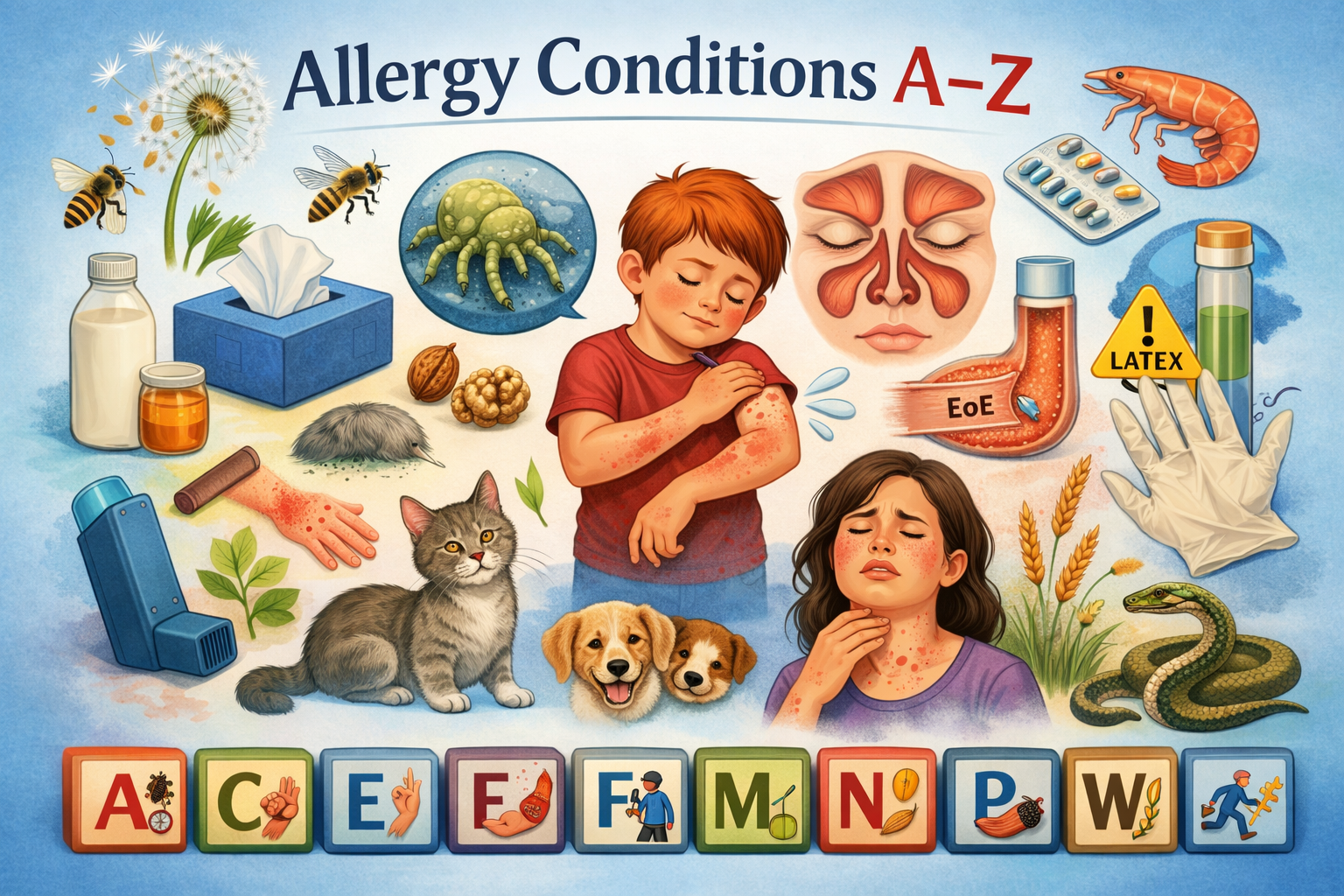
Common allergy conditions, including asthma, eczema, hay fever, food allergy and anaphylaxis.
Allergy-related disease can affect the airways, skin, gut and circulation, with symptoms ranging from sneezing and eczema to wheeze, swelling and anaphylaxis. Current guidance supports an allergy-focused history, targeted testing and a personalised management plan rather than broad, non-specific testing. This page provides a clear overview of common allergy conditions, typical triggers, symptoms and when specialist assessment may be helpful.
Common Allergy Conditions
Allergic Asthma
Allergic asthma is asthma associated with sensitisation to allergens such as pollen, house dust mite, mould or animal dander. It commonly causes cough, wheeze, chest tightness and breathlessness, and symptoms may worsen during pollen seasons or with indoor allergen exposure. Assessment may include spirometry, FeNO where appropriate, and targeted allergy testing.
Allergic Rhinitis (Hay Fever)
Allergic rhinitis is an IgE-mediated reaction to airborne allergens, often causing sneezing, nasal blockage, runny nose, itchy eyes and disturbed sleep. It can affect concentration, school performance and work productivity, and it often coexists with asthma. Treatment may include allergen avoidance advice, antihistamines, nasal sprays and, in selected cases, allergen immunotherapy.
Anaphylaxis
Anaphylaxis is a severe, rapidly developing allergic reaction that can affect breathing and circulation and should be treated as a medical emergency. Triggers may include foods, medications, insect stings or latex. Specialist review focuses on identifying the likely trigger, confirming the diagnosis where possible, reducing future risk and ensuring a clear emergency action plan.
Angioedema
Angioedema is swelling of deeper layers of the skin, often affecting the lips, eyelids or throat. It may occur with urticaria or independently and can be triggered by allergens, medications or underlying conditions.
Allergic Conjunctivitis
An inflammation of the eyes caused by allergens such as pollen or pet dander, leading to redness, itching, watering and swelling.
Bee and Wasp Venom Allergy
An IgE-mediated allergic reaction to insect venom that can cause local swelling or systemic reactions, including anaphylaxis. Venom immunotherapy is an effective treatment option.
Contact Dermatitis
Contact dermatitis is inflammation of the skin caused by contact with an irritant or an allergen such as nickel, fragrances, preservatives, rubber chemicals or some cosmetics. Symptoms may include redness, itching, dryness, blistering or cracking. Patch testing may be recommended when allergic contact dermatitis is suspected.
Chronic Urticaria
A condition characterised by recurrent hives lasting more than six weeks. It is usually not caused by external allergens and often involves mast cell activation.
Cold-Induced Urticaria
A physical urticaria triggered by cold exposure, which can cause local hives or, in severe cases, systemic reactions such as collapse when exposed to cold water.
Dairy Allergy
Dairy allergy is an immune reaction to proteins in cow’s milk and can cause hives, vomiting, abdominal symptoms, eczema flares or, more rarely, anaphylaxis. It differs from lactose intolerance, which is not an allergy. Careful diagnosis is important so that unnecessary avoidance is not advised and nutrition is protected.
Drug Allergy
Drug allergy refers to an immune-mediated reaction to a medicine, for example certain antibiotics, non-steroidal anti-inflammatory drugs or anaesthetic agents. Many reported “drug allergies” are not true allergy, so accurate assessment is important because an incorrect label can unnecessarily restrict future treatment options. Investigation may include a detailed timeline, records review and, in selected cases, supervised challenge testing.
Dust Allergy
Commonly caused by house dust mites, leading to persistent nasal symptoms, sneezing, and worsening asthma.
Eczema (Atopic Dermatitis)
Eczema is a chronic inflammatory skin condition linked to skin barrier dysfunction and is often one of the earliest signs of atopy. It causes dry, itchy, inflamed skin and may coexist with food allergy, asthma or allergic rhinitis. Management usually focuses on regular emollients, anti-inflammatory treatment, trigger reduction and treatment of secondary infection where needed.
Eosinophilic Oesophagitis (EoE)
A chronic immune-mediated condition affecting the oesophagus, often linked to food allergens, causing swallowing difficulties, food impaction and reflux-like symptoms.
Food Allergy
Food allergy is an immune reaction to a food trigger and may cause hives, swelling, vomiting, coughing, wheeze or anaphylaxis. In children, milk and egg are common triggers; in older children and adults, peanut, tree nuts, shellfish and some fruits are also important. Diagnosis relies on a compatible clinical history supported by targeted tests rather than test results alone.
Food Protein-Induced Enterocolitis Syndrome (FPIES)
A non-IgE-mediated food allergy seen in infants, causing delayed vomiting, lethargy and dehydration after ingestion of trigger foods.
Grass Pollen Allergy
A common seasonal allergy causing hay fever symptoms during spring and summer, often associated with allergic asthma.
House Dust Mite Allergy
House dust mite allergy is a common cause of perennial rhinitis and can also contribute to asthma symptoms. Typical features include nasal blockage, sneezing, itchy eyes and symptoms that are worse indoors or on waking. Management may include environmental measures, medication and, for selected patients, allergen immunotherapy.
Histamine Intolerance
A condition related to impaired histamine metabolism, leading to symptoms such as flushing, headaches, hives and gastrointestinal discomfort.
Insect Sting Allergy
Allergy to bee or wasp venom can cause reactions ranging from large local swelling to full systemic anaphylaxis. Anyone with breathing difficulty, dizziness or collapse after a sting should have specialist assessment. Venom immunotherapy can be highly effective in reducing the risk of severe future reactions in appropriately selected patients.
Idiopathic Anaphylaxis
Anaphylaxis occurring without an identifiable trigger, requiring specialist investigation and long-term management planning.
Latex Allergy
Latex allergy is an allergy to natural rubber latex proteins found in some gloves and medical or household products. Reactions may include itching, hives, rhinitis, wheeze or anaphylaxis. It is especially important to identify before medical or dental procedures if there is a compatible history.
Lipid Transfer Protein (LTP) Allergy
A plant food allergy associated with severe reactions to fruits, nuts and vegetables, particularly in Mediterranean populations.
Mould Allergy
Mould allergy is caused by sensitisation to airborne fungal spores and may lead to sneezing, nasal congestion, itchy eyes, cough or worsening asthma. Symptoms can be more noticeable in damp indoor environments or during certain seasons. Reducing damp and mould exposure can form part of management alongside standard allergy treatment.
Mast Cell Activation Syndrome (MCAS)
A condition characterised by inappropriate mast cell activation leading to recurrent allergic-type symptoms affecting multiple organ systems.
Medication Hypersensitivity
A broad term describing adverse immune reactions to medications, ranging from mild rashes to severe systemic reactions.
Nut Allergy
Nut allergy may involve peanut, tree nuts or both, and reactions vary from mild oral symptoms to severe anaphylaxis. Because accidental exposure can occur, clear diagnosis and practical avoidance advice are essential. Some patients may also benefit from component-resolved diagnostics to improve risk assessment.
Non-IgE Mediated Food Allergy
A delayed immune reaction to foods, commonly presenting with gastrointestinal symptoms, eczema or poor growth in infants.
Oral Allergy Syndrome
Oral allergy syndrome, also known as pollen food syndrome, usually causes itching or tingling of the lips, mouth or throat after eating certain raw fruits, vegetables or nuts. It is commonly linked to pollen allergy, particularly birch pollen. Symptoms are often mild, but not all mouth symptoms after food are due to this condition, so assessment may still be needed.
Pet Allergy
Pet allergy is caused by sensitisation to proteins found in animal skin flakes, saliva or urine rather than fur itself. Symptoms may include sneezing, itchy eyes, wheeze, cough or eczema flares. Cats and dogs are frequent triggers, but small mammals can also be involved.
Pollen Food Syndrome
Also known as oral allergy syndrome, this condition results from cross-reactivity between pollen allergens and certain foods.
Shellfish Allergy
Shellfish allergy commonly involves crustaceans such as prawn, crab and lobster, and may cause rapid-onset reactions after ingestion. Reactions can be severe, so accurate diagnosis and emergency planning are important when clinically indicated. Shellfish allergy is different from fish allergy.
Sinusitis (Allergy-Related)
Chronic sinus inflammation may be linked to underlying allergic rhinitis, causing nasal blockage, facial pressure and recurrent infections.
Tree Pollen Allergy
A seasonal allergy occurring in early spring, commonly triggered by birch, oak or alder pollen.
Venom Allergy
A severe allergic reaction to insect venom requiring specialist assessment and often treated with venom immunotherapy.
Wheat Allergy
Wheat allergy is an immune response to proteins in wheat and may cause skin, gut or respiratory symptoms. It is different from coeliac disease and from non-coeliac gluten sensitivity. Proper diagnosis matters because the long-term management and dietary implications are not the same.
Wheat-Dependent Exercise-Induced Anaphylaxis
A rare condition where allergic reactions occur when wheat ingestion is combined with physical exercise.
How Allergy Conditions Are Diagnosed
Diagnosis starts with a detailed allergy-focused clinical history. Depending on the symptoms and suspected trigger, this may be followed by skin prick testing, specific IgE blood tests, patch testing for contact dermatitis, breathing tests for asthma, or supervised oral or drug challenge testing in selected cases. Current guidance emphasises that test results should always be interpreted in the context of symptoms and exposure history.
When to Seek Specialist Advice
Specialist assessment is particularly important for suspected anaphylaxis, recurrent unexplained reactions, poorly controlled allergic asthma, food reactions affecting nutrition, possible drug allergy, complex eczema, or when the diagnosis remains uncertain. Early, accurate diagnosis can prevent unnecessary avoidance, improve symptom control and support safer long-term management.
Why Accurate Diagnosis Matters
Many symptoms that appear “allergic” can overlap with infection, intolerance, irritation or non-allergic inflammation. An accurate diagnosis helps distinguish allergy from non-allergic conditions, guides the right treatment, avoids unnecessary dietary or medication restrictions and identifies patients who may need emergency medication or immunotherapy.