
Food Allergy Travel Insurance & Safety Guide
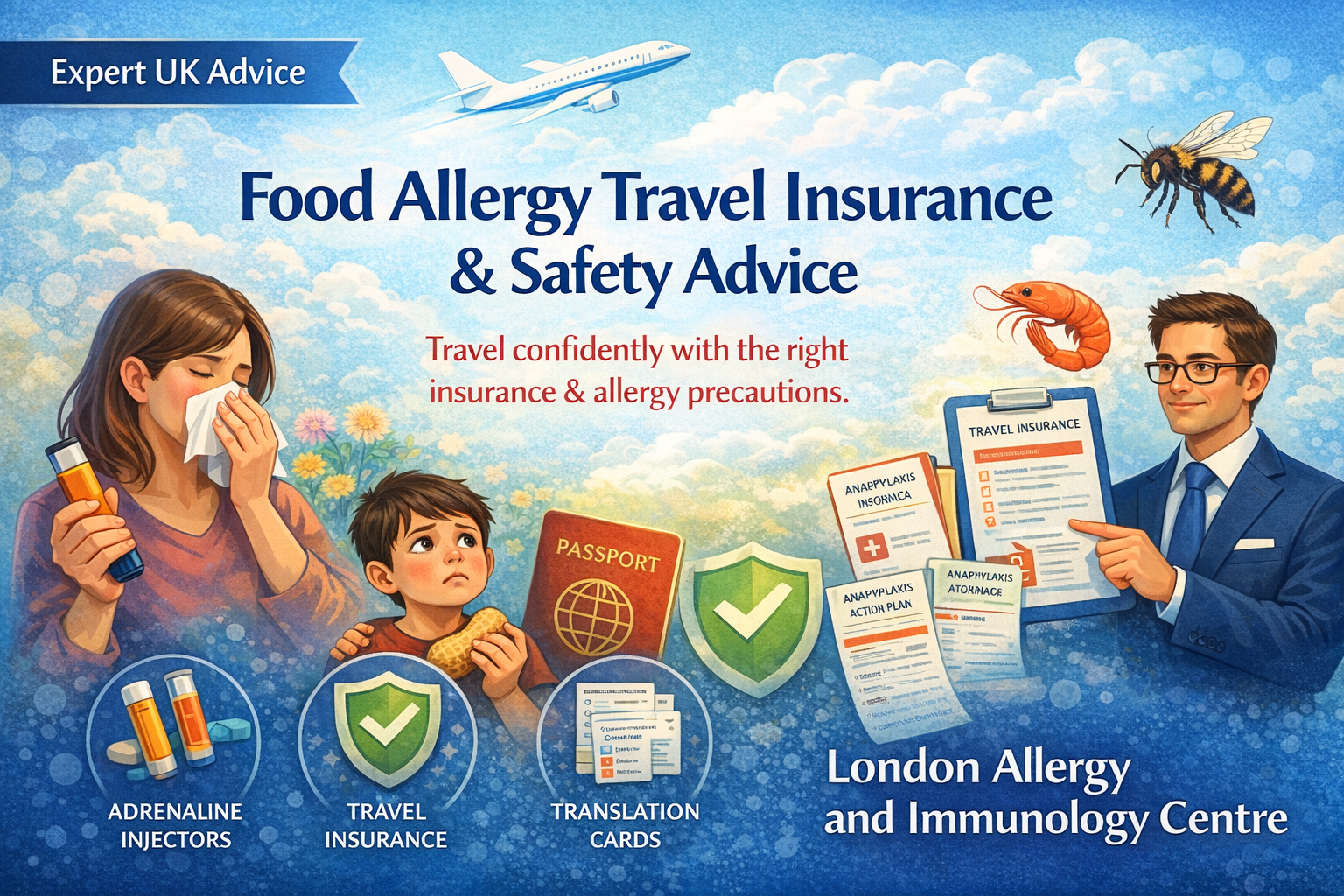
Expert guidance on travelling safely with food allergies, including insurance, adrenaline auto-injectors and preparation tip.
How to Choose the Right Travel Insurance and Stay Safe Abroad
Travelling with a food allergy — particularly if you are at risk of anaphylaxis — requires careful planning. An allergic reaction abroad can be distressing, but it becomes significantly more complicated if your travel insurance does not cover emergency treatment.
This guide explains how to choose the right food allergy travel insurance, what to declare, and how to reduce your risk while travelling — based on current UK allergy guidance and 2025–2026 medical evidence.
How to Choose Travel Insurance with Food Allergy
Not all policies are suitable for people with allergies. When comparing travel insurance, ensure your policy includes:
- Emergency treatment for allergic reactions and anaphylaxis
- Hospital admission and ambulance costs
- Cover for adrenaline auto-injectors and prescribed medication
- 24-hour emergency medical assistance
- Medical repatriation (return to the UK if required)
- Cancellation cover if allergy-related illness prevents travel
If you carry an adrenaline auto-injector (EpiPen, Jext or Emerade) or have a history of anaphylaxis, this must be declared during the insurer’s medical screening process.
Before You Travel with a Food Allergy
Preparation is essential. Follow these evidence-based steps to reduce risk while travelling:
- Know how to use your adrenaline auto-injector
Refresh your technique before travelling. Adrenaline is the first-line treatment for anaphylaxis — antihistamines are not a substitute. - Carry two adrenaline auto-injectors at all times
Keep them in your hand luggage and ensure they are in date. A GP or allergy clinic letter can help at airport security. - Bring an allergy action plan and medical identification
Carry a written Anaphylaxis Action Plan, medical alert bracelet, or allergy card. - Pack essential medication
Include non-sedating antihistamines (e.g. cetirizine) and any prescribed treatments. - Prepare translated allergy information
If travelling abroad, carry a translated list of your allergens to show in restaurants. - Bring safe food
Do not rely on airline or restaurant meals. Always have a safe alternative available. - Research medical care at your destination
Identify the nearest hospital and save emergency numbers before travelling.
Is Flying Safe with a Food Allergy?
Current medical literature (2025) confirms that allergic reactions during flights are rare, and most patients can travel safely with appropriate precautions.
However, risk is not zero. Recommended precautions include:
- Informing the airline in advance
- Cleaning your seating area
- Avoiding airline-provided meals if unsure
- Carrying your own safe food
What Should You Declare to Your Insurer?
You should always declare:
- Diagnosed food allergies
- Previous allergic reactions or anaphylaxis
- Hospital admissions or emergency treatment
- Prescription of adrenaline auto-injectors
Providing accurate information ensures your policy is valid and reduces the risk of claim refusal.
Frequently Asked Questions
Can you get travel insurance with a nut allergy?
Yes. Most insurers will provide cover if the allergy is declared during screening. Specialist providers may offer better cover for severe allergies.
Do I need to declare food allergy on travel insurance?
Yes. Food allergy — especially with a history of anaphylaxis — is considered a pre-existing medical condition and must be declared.
How many adrenaline pens should I travel with?
Guidelines recommend carrying at least two adrenaline auto-injectors at all times.
What is the biggest risk when travelling with food allergy?
The main risks include language barriers, unfamiliar foods, and accidental exposure — particularly when eating out or travelling by air.
Our consultant-led allergy clinic provides personalised risk assessment, travel advice, and allergy testing. We help you travel safely and confidently with food allergy.
Medical Disclaimer: This information is for educational purposes only and does not replace personalised medical advice. Always consult an allergy specialist for individual guidance.